The most reliable ways to get more customers for a small business are to be easy to find when someone searches nearby, give people reasons to trust you, make it simple to contact you, and follow up on every inquiry. Below are twelve methods that work for local businesses, in roughly the order we would tackle them. You do not need to do all twelve. Pick the two or three where you are weakest and start there.
Be found when people search
1. Complete your Google Business Profile
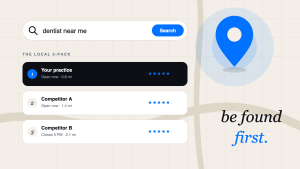
This is the free listing that appears in Google Maps and in the panel next to your name. Fill in every section: categories, services, hours, service area, photos and a clear description. Check it monthly. Incomplete profiles lose out to complete ones. Our guide to Google Business Profile optimization walks through each field.
2. Build real local SEO on your website
Give each main service its own page. Mention the cities and neighborhoods you serve, show your address or service area, and write the way clients talk. A page titled “Emergency AC repair in Tampa” has a better chance of matching a search than a general “Services” page. If you are new to this, read local SEO for small business first, or see our local SEO service.
3. Keep your listings consistent
Your name, address and phone number should match everywhere: Google, Apple Maps, Bing, Yelp, industry directories and your own site. Inconsistent details confuse both people and search engines. Start with the major platforms and the directories specific to your trade.
Earn trust before they call
4. Ask for reviews every time
Most happy clients will leave a review if you ask and make it easy. Send a direct link by text right after the job is done. Make asking part of your routine, not a special project. Do not offer payment or discounts for reviews, and never write your own. Our article on how to get more Google reviews has wording you can use.
5. Reply to every review
A short, specific reply to a good review shows you pay attention. A calm, helpful reply to a bad one shows future clients how you handle problems, which is often more persuasive than the review itself.
6. Show your real work
Photos of finished jobs, your team and your location do more than adjectives. Put them on your website, your Google profile and your social accounts. Ask clients for permission before showing their property or their face.
Make it easy to buy
7. Fix your website’s basics
Open your site on your phone. Is your phone number tappable? Can someone book or request a quote in under a minute? Does it load quickly? Many small business sites lose people in the first few seconds. A site that is clear and simple will usually outperform a fancy one. See website development if yours needs a rebuild.
8. Reply to inquiries fast
People who contact a local business often contact several at once. The first useful reply tends to win. Decide on a response rule, such as the same business day, and make someone responsible. An automatic text that confirms you received the message, then a personal reply as soon as you can, covers most situations.
Reach people who are not searching yet
9. Ask for referrals on purpose
Referrals are often your best clients, yet many owners only wait for them. Ask directly: “If you know anyone who needs this, I would appreciate the introduction.” Consider a simple thank-you for referrers, within the rules of your industry. A basic process is explained under referral marketing.
10. Partner with neighboring businesses
Think about who serves your clients before or after you. A realtor and a home inspector, a gym and a physical therapist, a florist and an event venue. Offer to recommend each other. Keep it honest: only recommend people you would use yourself.
11. Run paid ads once the basics work
Paid search puts you in front of people who are looking right now. It works best when your profile, reviews and website are already solid, because those determine whether the click turns into a call. Start with a modest, fixed monthly budget and track calls and booked jobs. Our Google Ads management covers this, and the checklist in local SEO checklist shows what to fix before you spend.
12. Stay in touch with past clients
It costs less to bring back a past client than to find a new one. A short email or text a few times a year, with a seasonal reminder or a useful tip, keeps your name fresh. Make it easy to opt out, and do not send more than you would want to receive. Email and SMS both work for this, provided you have permission to contact people.
A simple way to choose where to start
Run through this short process:
- Write down where your last ten clients came from. Ask them if you are not sure.
- Look for the source that brought in the best clients, not just the most.
- Check whether the basics are in place: profile, reviews, site, reply speed.
- Fix the weakest basic first.
- Add one new channel at a time and give it at least a few months before judging it.
Common mistakes to avoid
- Spending on ads before the website works. Paid clicks to a weak page are money wasted.
- Trying everything at once. A small team cannot do twelve things well at the same time.
- Not tracking. If you do not know where clients come from, you cannot decide what to keep.
- Ignoring current clients. Repeat business and referrals are often your cheapest growth.
- Believing guarantees. No honest marketer can promise a specific ranking or a specific number of new clients.
How long does it take?
It depends on the method. Replying faster, asking for reviews and fixing your profile can change things within weeks. Local SEO and content usually take several months to show clear results. Paid ads can produce inquiries quickly but stop when you stop paying. Plan a mix: quick fixes first, steady long-term work alongside, and paid ads where the numbers justify them.
A realistic first month
If you are overwhelmed, here is a gentle plan. In week one, fix your Google profile and test your website on a phone. In week two, set up a way to ask every client for a review and write down how each new client found you. In week three, ask five past clients for referrals and contact two neighboring businesses about recommending each other. In week four, look at your notes and choose one thing to improve further. That is a modest month of work, and it puts you ahead of many competitors who never get past good intentions.
Next step
If you would like a second opinion on which of these will make the biggest difference for your business, talk to us at USM. We work with local businesses and franchises across the US, and we will tell you plainly where we think your effort should go first.