Local SEO is the work of making your business show up when people nearby search for what you sell, whether in Google Maps, the local results at the top of the page or ordinary search listings. For a small business, it comes down to three things: a complete Google Business Profile, a website that clearly says what you do and where, and enough trust signals, such as reviews and consistent listings, that Google feels safe recommending you. This guide explains each piece in plain terms and tells you what to do first.
What local SEO actually is
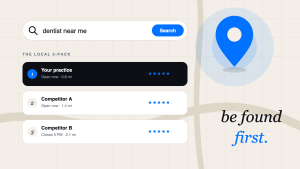
Regular SEO tries to rank a page for a search anywhere in the country. Local SEO applies when the searcher wants something close by: “dentist near me,” “roof repair Dayton” or “best tacos downtown.” Google shows a map with a short list of businesses, then regular results below it. Local SEO is about earning a place in that map list and in the results beneath it.
Google has said that local results are mainly based on relevance, distance and prominence. In plain English:
- Relevance: how well your business matches what the person typed.
- Distance: how close you are to the searcher, or to the area they named.
- Prominence: how well known and trusted you appear to be, based on reviews, links, mentions and your overall online presence.
You cannot change distance. You can influence the other two, and that is where your effort goes.
Step 1: claim and complete your Google Business Profile
Your Google Business Profile is a free listing that controls how you appear in Maps and in the panel beside your name. It is the single most important local SEO asset for most small businesses.
Make sure you:
- Have claimed and verified the profile.
- Used your real business name, with no keywords added.
- Picked the most accurate primary category.
- Listed your services and a plain description.
- Set accurate hours, including holidays.
- Added real photos of your work, team and location.
We cover each field in detail in our guide to Google Business Profile optimization.
Step 2: make your website local and specific
Your website is where Google checks whether you really offer what your profile says. Many small business sites are vague. Fixing that is often the quickest win.
Give every main service its own page
A single “Services” page that lists everything in a paragraph rarely ranks well. A page for each core service lets you explain what is included, who it is for, how it works and what areas you cover.
Mention the places you serve
If you serve several towns, do not create dozens of near-identical pages. Instead, create pages only where you have something real to say, such as local projects, neighborhood details or specific service areas. Thin pages that swap one city name for another are not helpful and can hurt you.
Put your name, address and phone on the site
Use the same details as your Google profile, in text rather than an image. Add a contact page, and embed a map if you have a physical location.
Cover the basics
- Write a clear title and meta description for each page.
- Use headings that reflect how people talk.
- Make the site fast and easy to use on a phone.
- Add a tap-to-call button.
Our local SEO service covers this on-page work as part of a wider plan.
Step 3: build consistent listings (citations)
A citation is any mention of your business name, address and phone number on another site, such as Yelp, Apple Maps, Bing, an industry directory or a chamber of commerce page. Search engines compare these details across the web. When they match, you look reliable. When they do not, you create doubt.
Start with the big platforms, then add directories specific to your industry and region. If you have moved, changed your phone number or rebranded, find the old listings and update them. See local listings for how we handle this at scale.
Step 4: earn reviews and reply to them
Reviews affect both rankings and decisions. Clients read them before they call, and they are part of how Google judges prominence.
- Ask every happy client for a review, with a direct link.
- Do it consistently, not in one burst.
- Reply to all reviews politely and specifically.
- Never buy reviews or offer rewards for them.
Our article on getting more Google reviews has practical wording for requests.
Step 5: build local credibility off your site
Links and mentions from other local sources signal that you are a real part of the community. Realistic options include:
- Local chambers of commerce and business associations.
- Sponsorships of teams, events or charities you genuinely support.
- Suppliers, manufacturers or partners who list their approved providers.
- Local news mentions, when you have something worth sharing.
- Local business organizations in your trade.
Avoid paid link schemes. They are against Google’s guidelines and can do more harm than good.
A beginner’s order of operations
If you only follow one list, follow this one:
- Claim and verify your Google Business Profile.
- Complete every field and add real photos.
- Make sure your name, address and phone match across the web.
- Create or improve a page for each main service.
- Start asking for reviews and replying to them.
- Add a few local links and mentions.
- Check your results monthly and adjust.
How to tell whether it is working
Track a few simple signals rather than chasing rankings alone:
- Calls, direction requests and website clicks from your Google profile.
- Phone calls and form submissions from your site.
- Your position for a handful of important searches, checked from different places in your service area.
- Where new clients say they found you.
Rankings can look different depending on where the searcher is standing, so one screenshot does not tell the whole story. What matters is whether more of the right people are contacting you.
Common beginner mistakes
- Stuffing keywords into your Google business name. It can get your profile suspended.
- Using a virtual office or a P.O. box as your address.
- Creating duplicate listings for the same location.
- Ignoring negative reviews.
- Expecting overnight results. Local SEO usually takes months to build.
How local SEO differs by business type
The basics are the same, but the emphasis changes. A restaurant or shop with a storefront depends heavily on its map listing, photos, hours and reviews. A plumber or electrician who travels to clients depends on service-area pages, quick response and review volume. A law firm or dental practice depends on detailed service pages, trust signals and accurate practice information. A business with several locations needs a separate profile and page for each. Think about how your own clients decide, and weight your effort accordingly.
When to get help
You can do the basics yourself. Many owners hire help when they are short on time, when they serve several locations, or when competitors are well ahead. If you want a steady process rather than a to-do list that never gets finished, talk to USM. We will tell you honestly what is worth doing for your business and what can wait.